



Chest pain could be a symptom of angina or a heart attack. Moyo Studio/E+ via Getty Images
For patients hospitalized with chest pain, the amount of time they spend sedentary afterward is linked to a greater risk for more heart problems and death within a year. That’s the key finding of a new peer-reviewed study my colleagues and I published in the journal Circulation: Cardiovascular Quality and Outcomes.
We asked 609 emergency room patients experiencing chest pain — average age of 62 — to wear a physical activity monitor for 30 days after leaving the hospital. The monitor measured movements, sitting time and sleep throughout the day. We then followed patients for one year to track whether they had additional heart problems or died.
We found that patients who averaged more than 15 hours of sedentary behavior daily — which does not include sleep — were more than twice as likely to experience more heart problems or die in the year after discharge than patients who accrued a daily average of 12 hours of sedentary time.
But our goal wasn’t just to document that sitting is harmful. It was also to figure out what patients should do instead to lower their risk.
We found that replacing 30 minutes of sedentary time with moderate or vigorous movement, like brisk walking or running, was most beneficial. It was associated with a 62% lower risk of experiencing more heart problems or dying in the year after discharge. But we also found that replacing 30 minutes of sedentary time with just light movement, such as slow walking or housework, lowered the risk of heart problems and death by 50%.
Sleep was also a healthier option. Replacing 30 minutes of sedentary time with sleep lowered the risk of heart problems and death by 14%.
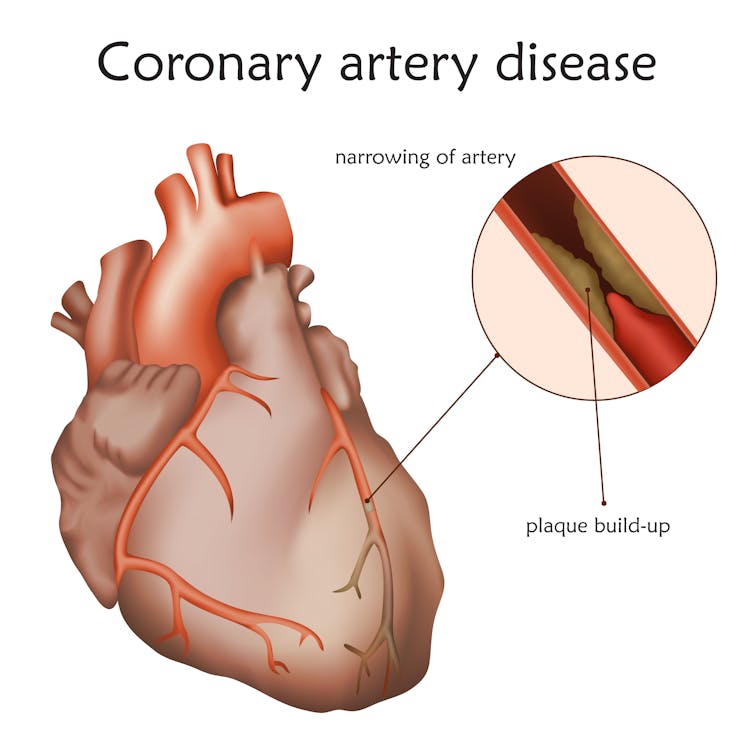
Clogged arteries could lead to a heart attack.
Veronica Zakharova/Science Photo Library via Getty Images
Why it matters
Over 8 million people in the U.S. are admitted to the hospital with chest pain suggestive of acute coronary syndrome. annually. This covers a range of conditions involving reduced blood flow to the heart, including angina and heart attack.
Patients with acute coronary syndrome remain at high risk of having another heart problem even with optimal medical treatment.
The risk also remains high for patients with chest pain who are discharged without a diagnosis of acute coronary syndrome, as their unexplained chest pain may be a precursor to more serious heart problems. Given this risk, there is a need to identify risk factors that can be modified to improve a patient’s prognosis after hospitalization for chest pain.
In previous research, we found that patients with acute coronary syndrome had a fear of exercise and were sedentary, spending over 13 hours a day sitting.
Given that sedentary behavior has been linked to poor heart health in the general population, we were concerned that patients were unknowingly increasing their risk of having another heart problem.
Our latest findings confirm that sedentary time is a harmful behavior for these patients. But beyond telling patients to stop sitting so much, our work provides important guidance: Any movement, regardless of how intense, can be beneficial after hospitalization. This is especially relevant for people recovering from heart problems who may find exercise difficult or scary.
While exercise provides the best “bang for your buck” in terms of health benefits, our findings are good news for patients who may not have the time, ability or desire to exercise. And for those unable to fit in more movement, just getting an extra half hour of sleep is a small, doable step that can make a meaningful difference for your health after hospitalization.
What still isn’t known
Researchers don’t fully understand why sedentary time is harmful. Muscles help regulate blood sugar and lipid levels. It is thought that when muscles aren’t used, such as when patients sit for hours, this can lead to harmful elevations in blood sugar and lipids.
In turn, this can cause inflammation, plaque buildup in the arteries and organ damage. More research is needed to understand the biological mechanisms so that we can determine just how much movement is needed in a day.
What’s next
While our study highlights the potential risks of sedentary behavior after being hospitalized for chest pain, it was an observational study. Clinical trials are needed to confirm that replacing sedentary time with activity or sleep can improve prognosis.
The Research Brief is a short take on interesting academic work.

Keith Diaz receives funding from the National Institutes of Health.
—-
Author : Keith Diaz, Associate Professor of Behavioral Medicine, Columbia University
Publish date : 2025-05-21 13:02:00
Copyright for syndicated content belongs to the linked Source.