

Few phrases so rile language purists as the usage of the adverb “literally” in a figurative sense, as in, “That movie literally blew my mind.”
However as a linguist who research how English has modified over the centuries, I will be able to promise that, whilst it would really feel like nails screeching on a blackboard, the usage of nonliteral “literally” evolved as an natural and dynamic outgrowth of the very human need to keep up a correspondence emotion and depth.
The literal previous
The phrase literal first gave the impression in English within the overdue 14th century, borrowed from French. In flip, French “literal” got here from Latin “littera,” with the unique which means of “pertaining to alphabetic letters.” It’s this identical root that dropped at English the phrases “literate” and “literature,” each reminiscent of the theory of understanding one’s “letters.”
In early English use, literal referred to the simple which means recoverable from studying a spiritual textual content, as on this instance from the Wycliffe Bible courting to 1383, “Holy scripture hath iiij vndirstondingis; literal, allegorik, moral, and anagogik.” The phrase literal as used right here contrasts an immediate – literal – studying of scripture’s which means to different extra symbolic or metaphorical ones.
A web page from the 1383 Wycliffe Bible, a translation that used the phrase literal to explain ‘Holy scripture.’
Photograph 12/Common Photographs Team by way of Getty Photographs
By means of the overdue sixteenth century, even though, literal starts for use no longer simply in connection with one of those studying but in addition so as to emphasize that one needs one’s phrases to be taken actually.
This building is already a semantic jump in that, when used this manner – as in, “John literally died of thirst” – the phrase supplies no which means contribution rather than emphasizing to a listener {that a} speaker way it exactly as mentioned. Finally, assuming John did certainly die owing to a loss of hydration, what does a speaker actually acquire through announcing “He literally died of thirst” as opposed to merely “He died of thirst”?
The benefit is that the usage of “literally” alerts that what used to be mentioned used to be atypical, fantastic or outstanding someway, guidance a listener towards a literal quite than a possibly much more likely figurative interpretation.
Finally, loss of life of thirst isn’t one thing you pay attention about each day, even though affected by thirst to the purpose the place one appears like loss of life is a extra common revel in. Such pragmatic enhancement of the phrase’s unique which means hints at how its fashionable marking of sturdy emphasis got here into play.
Bleached past popularity
The second one piece of the puzzle of ways “literally” become nonliteral calls for a short lived foray into how phrase meanings organically evolve through the years as they’re put to paintings through audio system.
An overly germane instance comes from “very,” a phrase during which its maximum not unusual which means – “extremely” – is however a shadow of its unique sense.
In Center English, “very” carried the which means of “actual” or “true,” as in being “verray in worde and dede” – this is, true in phrase and deed. But, when one thing is right, in particular when utilized in its “actual” sense, it means that it embodies the very best level of no matter high quality is described as true.
So, as an example, if any person is a “true fool,” they showcase any such top level of foolishness they’re taken for a real idiot. Used this manner, two distinct however comparable meanings – “true” and “to an extreme degree” – come to coexist.
By means of the sixteenth century, depth quite than trueness had grow to be the phrase very’s number one sense, thru a procedure that linguists check with as “semantic bleaching.” Apparently, phrases whose meanings contain fact, reminiscent of very, actually and actually, are in particular vulnerable to semantic bleaching. And “truth,” as in “exactly as said or written,” takes us again to “literally.”
Rather less literal
Recall that “literally” as soon as pertained most effective to contrasting a literal as opposed to metaphorical studying.
However, as with “very,” through the sixteenth century, its which means shifts clear of this purely referential which means to a extra rhetorical one: “Literally” had shifted to emphasizing a speaker’s literalness and flagging it as outstanding someway.
At that time, offering expressivity quite than a real or literal studying had grow to be its number one function. Simply believe a controversy between spouses, the place one says “I literally called you three times.” The aim of “literally” this is actually most effective considered one of underscoring the implication that calling 3 times used to be over the top and atypical.
From there to hyperbolically announcing “I was literally dying of thirst” is only one step additional down the street of semantic bleaching. The figurative studying turns into an increasing number of conceivable, as audio system capitalize completely at the expressive power quite than the phrase’s former shell of literality.
That is actually no other than announcing one thing like “I am truly dying over here” when one is annoyed, however is, in reality, no longer in fact loss of life. It’s depth conveyed, no longer drawing close demise, as “truly” has moved from marking fact to marking emphasis.
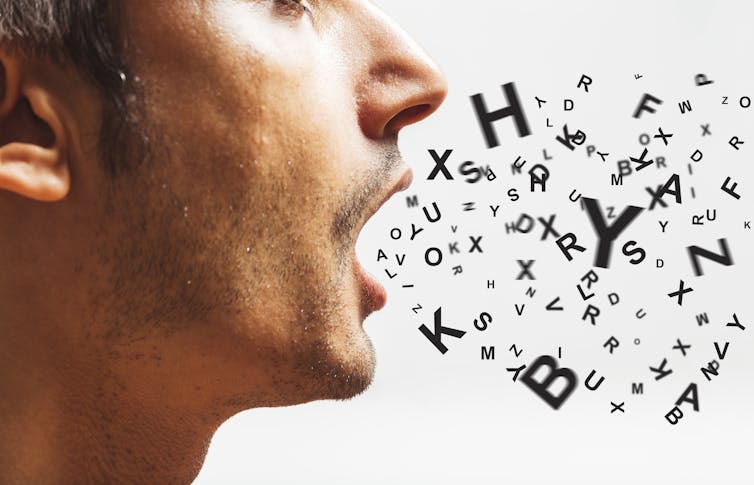
Phrase meanings organically evolve through the years as they’re put to paintings through audio system.
jaouad.Okay/iStock by way of Getty Photographs Plus
Signal of the days
However what of the usage of “literally” to imply one thing reputedly contradictory to its unique which means?
On that entrance, it’s surely a long way from the primary phrase in English to have shifted towards its reverse. For example, when in 1667’s “Paradise Lost” John Milton writes, “The Serpent … with brazen Eyes And hairie Main terrific,” the phrase “terrific” is admittedly meant in its unique sense of “terrifying”“ as opposed to our modern “fabulous” take.
Occasionally, conflicting senses even exist on the identical time. Bring to mind how “clipping” will also be about chopping one thing away or pulling one thing in combination. Likewise, believe the ceaselessly oppositionally hired verb “to cleave,” with which one both tears aside or sticks in combination. On this larger semantic image, the usage of “literally” nonfiguratively is actually not anything to get labored up over.
The gist is that language adjustments on account of the way it reveals itself maximum gainfully hired through audio system because it winds its approach thru time.
Actually’s major downside is that, in contrast to “terrific” or “very,” its semantic previous has no longer but pale from collective reminiscence. However for many who nonetheless hold to its literalness even if Frances Brooke, Charles Dickens and Mark Twain all embraced its figurative glory, it’s going to merely be time to actually let cross.