



Windy days can mean more pollen and more sneezing. mladenbalinovac/E+ via Getty Images
Evolution has fostered many reproductive strategies across the spectrum of life. From dandelions to giraffes, nature finds a way.
One of those ways creates quite a bit of suffering for humans: pollen, the infamous male gametophyte of the plant kingdom.
In the Southeastern U.S., where I live, you know it’s spring when your car has turned yellow and pollen blankets your patio furniture and anything else left outside. Suddenly there are long lines at every car wash in town.
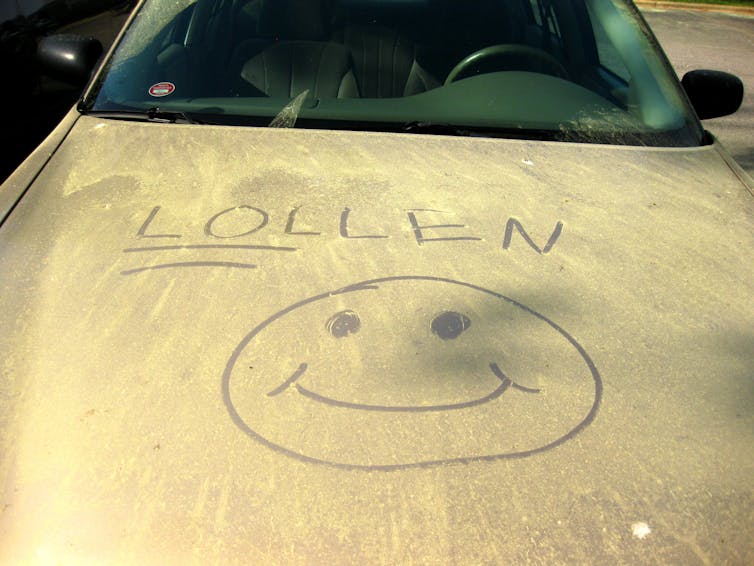
On heavy pollen days, cars can end up covered in yellow grains.
Scott Akerman/Flickr, CC BY
Even people who aren’t allergic to pollen – clearly an advantage for a pollination ecologist like me – can experience sneezing and watery eyes during the release of tree pollen each spring. Enough particulate matter in the air will irritate just about anyone, even if your immune system does not launch an all-out attack.
So, why is there so much pollen? And why does it seem to be getting worse?
2 ways trees spread their pollen
Trees don’t have an easy time in the reproductive game. As a tree, you have two options to disperse your pollen.
Option 1: Employ an agent, such as a butterfly or bee, that can carry your pollen to another plant of the same species.
The downside of this option is that you must invest in a showy flower display and a sweet scent to advertise yourself, and sugary nectar to pay your agent for its services.
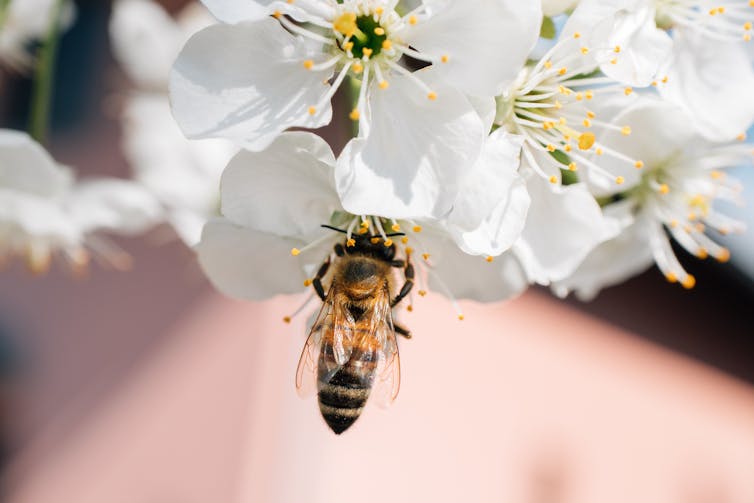
A bee enjoys pollen from a cherry blossom. Pollen is a primary source of protein for bees.
Ivan Radic/Flickr, CC BY
Option 2, the budget option, is much less precise: Get a free ride on the wind.
Wind was the original pollinator, evolving long before animal-mediated pollination. Wind doesn’t require a showy flower nor a nectar reward. What it does require for pollination to succeed is ample amounts of lightweight, small-diameter pollen.
Why wind-blown pollen makes allergies worse
Wind is not an efficient pollinator, however. The probability of one pollen grain landing in the right location – the stigma or ovule of another plant of the same species – is infinitesimally small.
Therefore, wind-pollinated trees must compensate for this inefficiency by producing copious amounts of pollen, and it must be light enough to be carried.
For allergy sufferers, that can mean air filled with microscopic pollen grains that can get into your eyes, throat and lungs, sneak in through window screens and convince your immune system that you’ve inhaled a dangerous intruder.
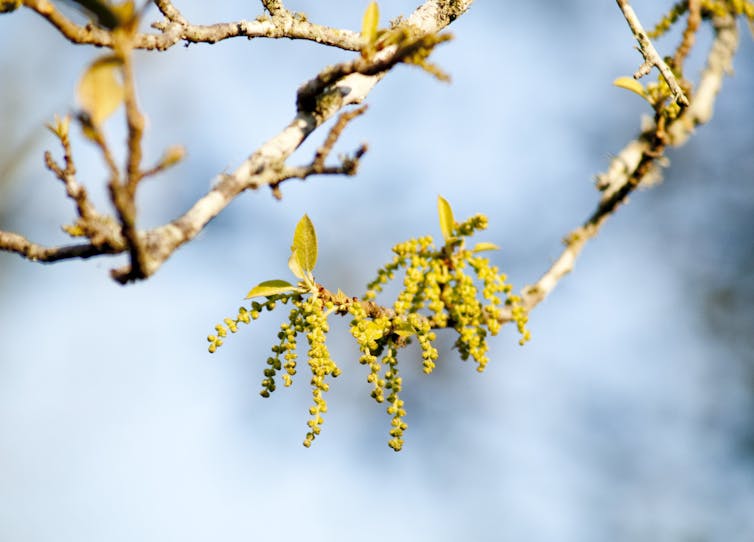
When wind blows the tiny pollen grains of live oaks, allergy sufferers feel it.
Charles Willgren/Flickr, CC BY
Plants relying on animal-mediated pollination, by contrast, can produce heavier and stickier pollen to adhere to the body of an insect. So don’t blame the bees for your allergies – it’s really the wind.
Climate change has a role here, too
Plants initiate pollen release based on a few factors, including temperature and light cues. Many of our temperate tree species respond to cues that signal the beginning of spring, including warmer temperatures.
Studies have found that pollen seasons have intensified in the past three decades as the climate has warmed. One study that examined 60 location across North America found pollen seasons expanded by an average of 20 days from 1990 to 2018 and pollen concentrations increased by 21%.
That’s not all. Increasing carbon dioxide levels may also be driving increases in the quantity of tree pollen produced.
Why the Southeast gets socked
What could make this pollen boost even worse?
For the Southeastern U.S. in particular, strong windstorms are becoming more common and more intense − and not just hurricanes.
Anyone who has lived in the Southeast for the past couple of decades has likely noticed this. The region has more tornado warnings, more severe thunderstorms, more power outages. This is especially true in the mid-South, from Mississippi to Alabama.
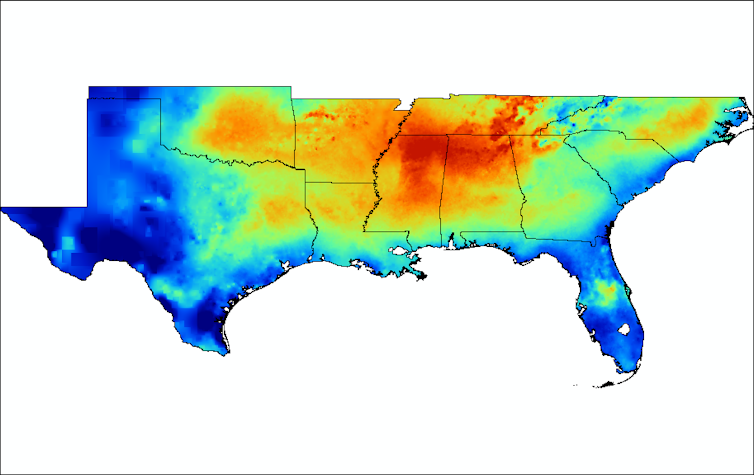
Severity of wind and storm events mapped from NOAA data, 2012-2019, shows high activity over Mississippi and Alabama. Red areas have the most severe events.
Christine Cairns Fortuin
Since wind is the vector of airborne pollen, windier conditions can also make allergies worse. Pollen remains airborne for longer on windy days, and it travels farther.
To make matters worse, increasing storm activity may be doing more than just transporting pollen. Storms can also break apart pollen grains, creating smaller particles that can penetrate deeper into the lungs.
Many allergy sufferers may notice worsening allergies during storms.
The peak of spring wind and storm season tends to correspond to the timing of the release of tree pollen that blankets our world in yellow. The effects of climate change, including longer pollen seasons and more pollen released, and corresponding shifts in windy days and storm severity are helping to create the perfect pollen storm.

Christine Cairns Fortuin receives funding from U.S. Forest Service, Southern Research Station.
—-
Author : Christine Cairns Fortuin, Assistant Professor of Forestry, Mississippi State University
Publish date : 2025-05-05 12:45:00
Copyright for syndicated content belongs to the linked Source.